
If you were searching for the Abdul Kalam Technology Innovation National Fellowship (AKTINF) 2026, then there is an important update you should not miss.
After the transition of SERB into the Anusandhan National Research Foundation (ANRF), the structure of many fellowships has changed.
As of 2026, the old AKTINF (Abdul Kalam Technology Innovation National Fellowship) is not taking any new nominations. So if you’re trying to apply under the Abdul Kalam Fellowship name, that option is basically paused for now.
That said, the purpose of the scheme hasn’t been dropped. It’s just moved. The same focus on translational and high-impact engineering research is now running through a new ANRF program called ANRF-ATRI (Translational Research and Innovation). So for 2026 funding, ATRI is the scheme you should actually be looking at, not the earlier AKTINF one.
🚀 New Scheme Replacing AKTINF: ANRF-ATRI 2026
For researchers who earlier planned to apply under Abdul Kalam Fellowship, the ANRF Translational Research and Innovation (ATRI) scheme is now the correct and live option.
Key Details – ANRF ATRI 2026
-
Application Window:
15 January 2026 to 24 February 2026 (up to 5:00 PM IST) -
Focus Area:
Translating research ideas into working technologies, prototypes, products, or scalable processes. -
Who It Targets:
Mid-career to senior engineers and scientists working in public-funded institutions. -
Portal:
All submissions and nominations are handled through the ANRF Online Portal
👉 https://anrfonline.in
In simple words, ATRI is doing what AKTINF was meant to do — just under a new framework and new name.
🎓 Original AKTINF Guidelines (For Reference Only)
Although new nominations under AKTINF are paused, it’s still useful to know how the fellowship worked earlier. If the scheme reopens later in 2026 under its original name, these benchmarks are usually followed.
Earlier AKTINF Benefits (Reference)
-
Monthly Fellowship: ₹25,000 per month (over and above salary)
-
Research Grant: ₹15 lakh per year (consumables, manpower, travel, etc.)
-
Institutional Overhead: ₹1 lakh per year
-
Duration: 3 years (extendable up to 5 years based on performance)
-
Quota: Only 10 fellowships nationwide per year
This clearly shows how competitive and selective the fellowship always was.
Eligibility Criteria (Based on Past AKTINF Rules)
If the Abdul Kalam Fellowship restarts later, eligibility is expected to remain mostly similar:
-
Nationality: Indian citizens or OCI working in India
-
Employment: Permanent position in a public-funded institution
(IITs, NITs, CSIR Labs, Central/State Universities, etc.) -
Service Requirement: Minimum 5 years of service remaining before retirement
-
Qualification: Engineering/Technology degree with strong innovation background
(patents, prototypes, tech transfer work)
⚠️ Very Important Update for 2026
Nomination-Based Only
Whether it is the old AKTINF or the new ANRF-ATRI, this fellowship is not direct apply.
You must be nominated by:
-
Head of Institution
-
Fellow of National Academies (INAE, IAS, NASI)
-
Previous national awardees (SS Bhatnagar, JC Bose, etc.)
No nomination = no consideration.
ANRF Portal is Mandatory
All translational research fellowships are now routed through ANRF Online Portal.
If you had a SERB account earlier, your profile needs to be migrated to ANRF to see active calls and nomination status.
⚡ One Common Confusion – INAE Fellowship vs Research Fellowship
Many people confuse this with INAE Fellow election, but both are totally different.
-
AKTINF / ATRI: Research funding fellowship
-
INAE Fellow: Honorary lifetime recognition
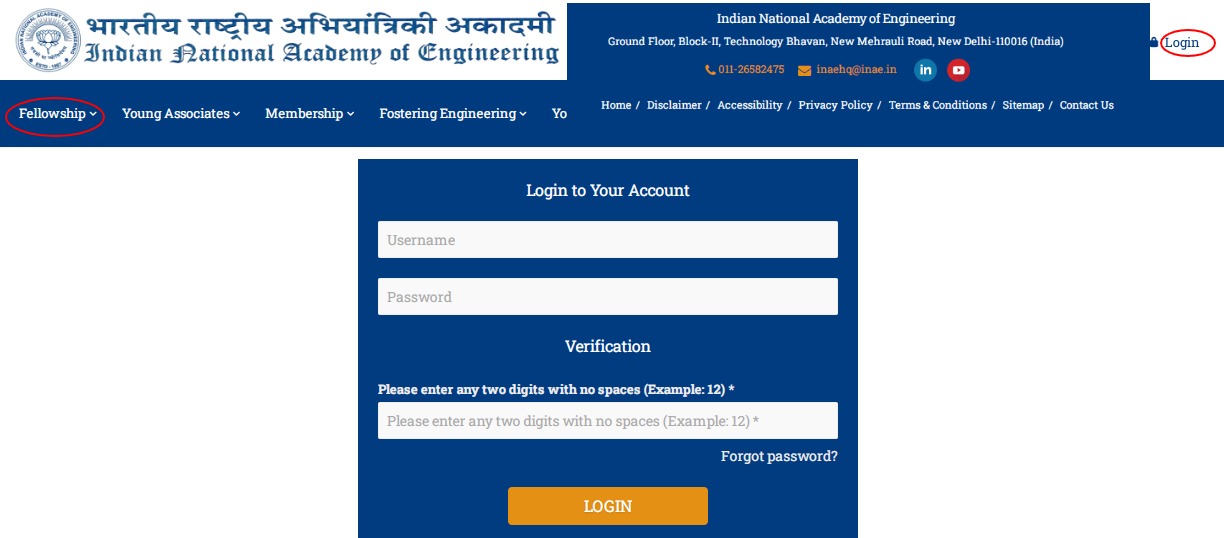
The INAE Fellow 2026 nomination cycle is separately active on the official INAE website:
👉 https://www.inae.in
Final Words
So to sum it up —
-
AKTINF 2026 is on hold
-
ANRF-ATRI is the active replacement
-
Nomination route is compulsory
-
ANRF portal is now the single window
If you are planning translational research funding in 2026, focus on ATRI, not the old Abdul Kalam scheme name.