
If you’ve ever wondered what really happens inside Parliament — not just the shouting you see on TV — then the LAMP Fellowship is probably something you’ve looked at already.
LAMP stands for Legislative Assistants to Members of Parliament. And it’s not some casual internship. It’s 11 months of working directly with an MP, understanding laws, debates, questions, and policy from inside the system. Now here’s the important part.
As of February 2026, the application cycle for the 2026–27 cohort has already closed. Yes. The deadline is over. But honestly, this is actually the best time to start preparing for the next cycle.
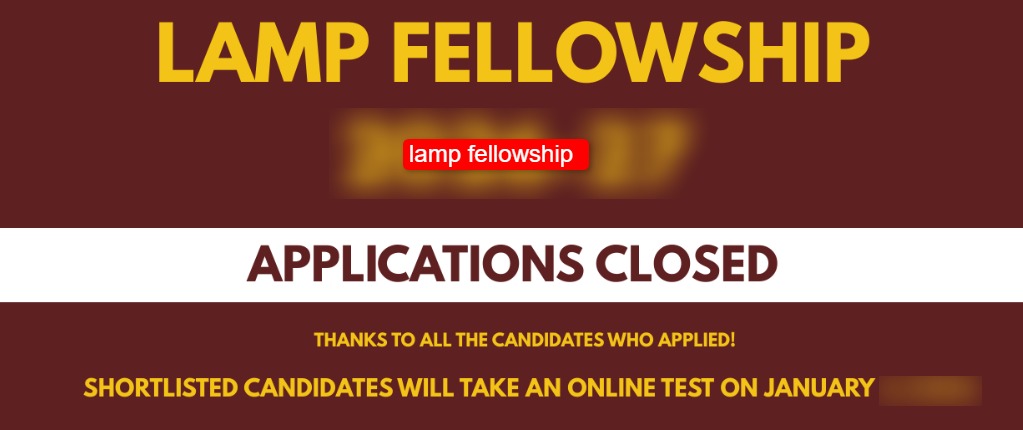
What is the LAMP Fellowship?
The LAMP Fellowship is run by PRS Legislative Research.
Selected fellows (around 75 each year) are placed with sitting Members of Parliament for 11 months. You work directly with your assigned MP on research, speeches, parliamentary questions, and legislative work.
This is not theory. It’s practical policy exposure at national level.
And competition? Very high.
2026–27 Cycle: Timeline Recap
If you’re checking whether you missed it, here’s the timeline:
-
Applications Opened: November 30, 2025
-
Application Deadline: December 21, 2025 (Closed)
-
Online Evaluation: January 4, 2026
-
Interviews: February 2026 (Ongoing)
-
Program Start: Mid-June 2026
So yes, the boat has sailed for this cycle. If you’re planning for 2027–28, expect applications to open around late November 2026. Mark your calendar early.
Eligibility – Are You LAMP Material?
The fellowship selects only about 75 fellows from thousands of applicants. So you need to check eligibility carefully.
-
Age: 25 years or younger
(For 2026–27 cycle, born on or after June 1, 2000) -
Education: At least a Bachelor’s degree in any discipline
-
Citizenship: Must be an Indian citizen
That’s it formally. But realistically, you also need strong writing, policy awareness, and analytical skills.
Stipend & Perks
This is a full-time commitment based in Delhi.
Monthly Stipend
₹23,000 per month.
It’s modest for Delhi, honestly. So plan your accommodation smartly.
Other Benefits
-
Direct mentorship from an MP
-
Exposure to Parliamentary sessions
-
Access to a powerful alumni network
Many alumni later go on to IAS, policy think tanks, international universities, or consulting roles.
The network is serious.
What Does a LAMP Fellow Actually Do?
Let me clear one myth.
You are not making tea or arranging files.
You are basically the research backbone for your MP.
Here’s what you may work on:
Drafting Parliamentary Questions
Helping your MP ask sharp questions during Question Hour.
Preparing Speeches
Writing notes and interventions for debates and Zero Hour discussions.
Policy Analysis
Reading Bills line by line. Understanding implications. Preparing summaries.
Private Member Bills
Researching and drafting legislative proposals your MP wants to introduce. Some days are intense. Some days are slow. But you will learn how policy actually moves.
How to Prepare for 2027–28 (Start Now)
Since the next application cycle will likely open in November 2026, you have time.
Use it properly.
1. Work on Your Policy Writing
You will need to write:
-
One Statement of Purpose (around 500 words)
-
One Policy Analysis Essay (around 500 words)
Start reading the monthly policy reviews by PRS Legislative Research.
Understand how they break down a Bill:
-
Background
-
Key provisions
-
Issues & concerns
-
Data
This structure matters.
2. Stay Original
The selection committee reportedly uses AI-detection tools.
Do not copy.
Do not use AI to draft your essays.
They look for clear thinking and authentic voice.
Generic answers get rejected quickly.
3. Build a Policy Interest
Whether it’s climate change, public health, digital governance, or semiconductor policy — pick something and go deep.
Read committee reports.
Follow Parliamentary debates.
Track new Bills.
It shows maturity in your application.
Quick FAQs
Q. Is work experience required?
Not mandatory, but internships in policy, law, or research help.
Q. Can engineers apply?
Yes. Any discipline is eligible.
Q. Is it only for political science students?
No. Fellows come from diverse backgrounds.
Q. Is it very competitive?
Yes. Extremely.
If you missed the 2026–27 deadline, don’t feel bad. Honestly, many strong candidates apply twice before getting selected.